
Silicone Injection Molding
Flexible by Nature. Engineered for Performance.
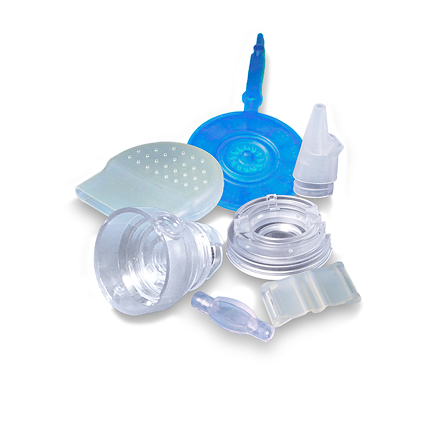
Liquid Injection Molding (LIM) and Liquid Silicone Rubber (LSR) are closely related terms, with LIM referring to the manufacturing process and LSR referring to the silicone material used within that process. In the industry, the terms are often used interchangeably when discussing silicone injection molding. LSR molding delivers exceptional flexibility, biocompatibility, and durability, making it ideal for demanding medical, consumer, aerospace, and automotive applications.
From medical components that comfortably move with the body to durable baby products, precision seals, and mission-critical industrial components, LSR offers virtually limitless design possibilities. Its outstanding precision allows for intricate geometries and smooth, high-quality finishes. It also offers remarkable properties, including superior tear resistance, chemical resistance, and extreme-temperature performance, making it an excellent choice for high-performance applications.
Once cured, a thermoset permanently sets into its final shape and cannot be melted or remolded, which is the reason it is extremely resistant to heat and chemicals.
Need flexibility without sacrificing durability? Complex geometries? Biocompatible materials for demanding applications?
We know how to transform silicone into precision-engineered solutions. Exceptional silicone parts come from smarter engineering at ASH Industries.
Benefits of Liquid Injection Molding (LIM)
 Design Flexibility
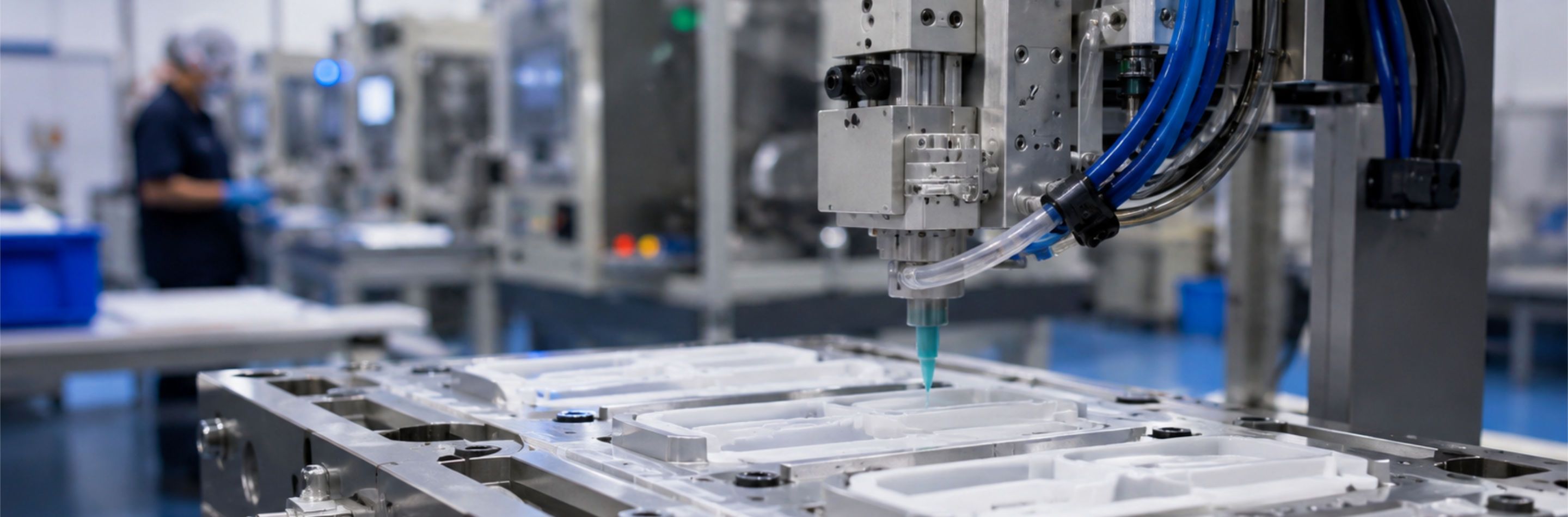
LIM enables the production of complex silicone components with exceptional consistency and precision. The process supports intricate geometries, thin walls, overmolding, and integrated sealing features, making it ideal for seals, O-rings, gaskets, medical devices, electronic components, and aerospace and automotive applications.
Performance in Demanding Environments
LIM materials are engineered to perform in harsh operating conditions involving extreme temperatures, moisture exposure, chemicals, oils, and repeated environmental stress. Silicone components maintain their flexibility and integrity in applications exposed to outdoor weathering, sterilization processes, engine compartments, vibration, and high-heat industrial environments.
Flexibility, Strength & Durability
Silicone offers excellent flexibility and elasticity, allowing parts to compress, stretch, and consistently return to their original shape. Components also provide strong tear resistance, durability, and long service life while resisting warping, cracking, and material degradation over time. Many silicone formulations additionally offer flame-retardant and biocompatible properties for specialized applications.
Precision & Production Efficiency
Compared to other silicone molding processes, LIM delivers outstanding dimensional accuracy and repeatability through automated mixing and injection systems. This process enables continuous, around-the-clock production of consistent, high-quality components.
FAQs
What is the difference between HCR and LSR?
HCR (High Consistency Rubber) and LSR (Liquid Silicone Rubber) are both silicone materials, but they differ in processing and performance. HCR is a pre-mixed, gum-like material that requires heat curing, while LSR is supplied in two liquid components that are automatically mixed and injection molded. LSR offers excellent consistency, precision, and scalability for high-volume production. ASH Industries specializes in LSR molding and does not manufacture HCR parts.
What is the difference between TPE and LSR?
Choosing between TPE and LSR depends on your application requirements. TPE is a flexible thermoplastic that is often more cost-effective and easier to process for simpler designs. LSR offers superior heat resistance, elasticity, chemical resistance, and biocompatibility, making it the preferred choice for demanding industrial, automotive, aerospace, and medical applications.
How flexible is silicone rubber?
Silicone rubber is known for its exceptional elasticity and can typically stretch from 100% to more than 1,000% of its original length before breaking, depending on the formulation. This flexibility makes it ideal for seals, gaskets, diaphragms, and other applications requiring repeated movement or compression.
What is the tensile strength of silicone?
The tensile strength of silicone varies by grade and formulation, typically ranging from approximately 200 to 1,500 psi. Reinforced silicone compounds can provide even greater strength while maintaining the flexibility that silicone is known for.
How long does a silicone injection mold last?
Silicone injection molds can last from hundreds of thousands of cycles to more than one million cycles, depending on part geometry, tooling materials, maintenance practices, and production conditions. ASH Industries maximizes mold life through in-house tooling maintenance and preventative care programs.
What is the difference between thermosets and thermoplastics?
Thermosets, such as silicone rubber, form permanent chemical bonds during curing and cannot be remolded once set. Thermoplastics can be reheated and reshaped multiple times. Because of their cross-linked structure, thermosets generally offer greater heat and chemical resistance, as well as long-term durability.